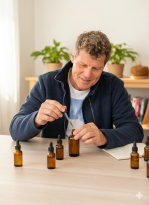
Content 50 ml
Recommended treatment
Free shipping on orders of more than £ 30.00
VAT included

Have you ever noticed that some people are instantly likeable? Many people believe that people will only like you because of natural traits you're born with: good looks, talent and sociability. But this is a misconception. Getting people to like you is within your control, and it's all to do with self-belief, knowing yourself and being emotionally intelligent. Here's what to do to be more likeable:
If people can see you're honest and genuine, they'll like you. People like those they feel they can trust. It's a challenge to like anyone you think is hiding their true self. If people can see you aren't faking it and are comfortable with who you are, they'll gravitate towards you.
So just be yourself! To support your self-confidence, Bach Flower Mix 44 helps you to believe in yourself and be more comfortable in your skin. Concentrate on stuff that enthuses you and makes you happy. You'll come across as more attractive and likeable than if you try to be something you're not. And if you find that some people don't like the real you: too bad! You'll know that the people who matter like you for who you really are.
Likeable people often chat away constantly. You never have to wonder what they're really thinking because they explain it in detail, and this puts everyone at ease. If you're an introvert, you may prefer to rely on emails and messages to express your thoughts rather than talking. But if you're not a great communicator, talking more is a skill you can develop.
Talkers are often well-liked, it's true. But listening carefully is equally important. When you're in a conversation, talk, ask a question and then pause for an answer. When you show that you're genuinely curious to learn about someone or something, it makes you more likeable.
People like it when you ask them for help or advice. Asking someone for their assistance will often make them like you more because they enjoy being able to provide the right answer.
On the other hand, no-one likes a know-it-all. One of the reasons for this is that if someone gives the impression they know everything, they won't ever be asking for our help, and as mentioned above, people enjoy being helpful. Know-alls also have an arrogant attitude, and people don't like those who seem to have an unattractive sense of pride.
Think about the people you like best. Chances are, they're the ones who are always willing to help you out by fixing your IT problems or proofreading your essay when you're up against a deadline. But be wary: if people think you're being manipulative and helping just to support your own agenda, they'll know you're not genuine.
Is it possible to develop a caring personality? Being altruistic doesn't always come easily, especially in the social media age where individualism seems to rule. You'll need to set aside your own goals and interests for a time and help others instead. But if you make a genuine effort to care about others, you'll find that people like you more.
It's hard to dislike someone who jokes about life and takes a lighthearted approach to problems. The most popular people are often those who can make people laugh. Witty banter might not be in your personality, but that doesn't matter. Just let people know that you can see the funny side of things, that you're a person who smiles often and laughs easily. You'll soon get people to like you.
The most likeable people are often those who can lighten up, put aside their own problems and see the bigger picture. Setting too much store by your own concerns is essentially a selfish attitude. Those who selflessly go with the flow will be liked better.
Well-liked people are often flexible and don't make too many demands. They'll listen to any genre of music, eat at any restaurant: they'll adjust to the preferences of others without making waves. Their easy-going attitude makes them more likeable. But it's a tricky one: if you take it too far, you'll be seen as a doormat!
Talk about others in a positive way. There's a psychological phenomenon known as" spontaneous trait transference". People come to associate with your own personality words such as "friendly", "helpful" and "warm" that you used in a complimentary way. Researchers found that even when people knew that the person didn't possess the personality traits described, this effect still occurred.
While it's important not to play the victim, people will respond favourably if you admit that you're facing a challenge and offer helpful solutions to your challenges. People will spot your weaknesses anyway, and owning up to them will make them like you better.
Sources:
https://www.businessinsider.com/how-to-be-more-likable-2017-12
https://www.forbes.com/sites/briannawiest/2018/12/11/how-to-be-the-most-likable-person-in-the-room/
Created by Tom Vermeersch (bio)

Tom Vermeersch is a certified Psychologist and Bach flower expert with more than 30 years of experience.

Find out if you're suffering from imposter syndrome
Do you sometimes feel your achievements are not the result of your hard work and skill but are just luck? And do you fear that one day, someone will reveal you as an imposter or fraud? You might have imposter syndrome!

What can you do if your kid doesn't want to go back to school?
What can you do if your kid doesn't want to go back to school? Here are our hints and tips to help if your child is expressing a refusal to go to school.

What makes it so hard to go back to work?
Millions of people furloughed for months are now being recalled to work. Others, who have been working from home throughout the lockdown, are returning to the office. And some jobs have simply disappeared: many people are facing redundancy and will soon have to cope with job hunting. Going back to work after an unprecedented length of time at home is quite a challenge.

Six things we think will make us happy, but don't!
When you think about things that will make you happy, what are the images that come to mind? Wealth, beauty, a dream house, long holidays, a top of the range car? Happiness is not a constant and how happy we feel depends on the way we choose to live our lives.

Motivation can be somewhat elusive - some days, you just can't seem to make yourself do the stuff you don't want to. But putting things off just leads to stress, frustration and a sense of guilt.

Live Forever: the Habits of People Who Live a Long, Healthy Life
Legends of immortality have been told and retold throughout history. From ancient Greek myths to modern movies and novels, the dream of eternal youth has been passed down from generation to generation.

Fact or fiction? Is it truly healthy?
There's so much contradictory health advice out there, it gets confusing. One year, butter is said to be bad for you, and margarine is better. The following year, it's the other way around. One article says running causes strain on your joints; another says it's good for you because it increases bone strength.

Signs of depression under the radar
It is not always obvious when someone is experiencing depression. Some people with depression mask their symptoms, hiding their feelings behind a smile to convince others they are happy.

Letting go of the past: 5 tips
Lynn Anderson told it very nicely in her song “I beg your pardon; I never promised you a rose garden”. Life isn’t all roses and everybody experiences something they would rather not once in their life.

Have you considered yoga? The advantages of practicing yoga
Have you considered yoga? There are many advantages to practicing yoga. It is a holistic practice benefitting you physically, emotionally & mentally.
Have you ever noticed that some people are instantly likeable? Many people believe that people will only like you because of natural traits you're born with: good looks, talent and sociability. But this is a misconception. Getting people to like you is within your control, and it's all to do with self-belief, knowing yourself and being emotionally intelligent. Here's what to do to be more likeable:
If people can see you're honest and genuine, they'll like you. People like those they feel they can trust. It's a challenge to like anyone you think is hiding their true self. If people can see you aren't faking it and are comfortable with who you are, they'll gravitate towards you.
So just be yourself! To support your self-confidence, Bach Flower Mix 44 helps you to believe in yourself and be more comfortable in your skin. Concentrate on stuff that enthuses you and makes you happy. You'll come across as more attractive and likeable than if you try to be something you're not. And if you find that some people don't like the real you: too bad! You'll know that the people who matter like you for who you really are.

Likeable people often chat away constantly. You never have to wonder what they're really thinking because they explain it in detail, and this puts everyone at ease. If you're an introvert, you may prefer to rely on emails and messages to express your thoughts rather than talking. But if you're not a great communicator, talking more is a skill you can develop.
Talkers are often well-liked, it's true. But listening carefully is equally important. When you're in a conversation, talk, ask a question and then pause for an answer. When you show that you're genuinely curious to learn about someone or something, it makes you more likeable.
People like it when you ask them for help or advice. Asking someone for their assistance will often make them like you more because they enjoy being able to provide the right answer.
On the other hand, no-one likes a know-it-all. One of the reasons for this is that if someone gives the impression they know everything, they won't ever be asking for our help, and as mentioned above, people enjoy being helpful. Know-alls also have an arrogant attitude, and people don't like those who seem to have an unattractive sense of pride.
Think about the people you like best. Chances are, they're the ones who are always willing to help you out by fixing your IT problems or proofreading your essay when you're up against a deadline. But be wary: if people think you're being manipulative and helping just to support your own agenda, they'll know you're not genuine.
Is it possible to develop a caring personality? Being altruistic doesn't always come easily, especially in the social media age where individualism seems to rule. You'll need to set aside your own goals and interests for a time and help others instead. But if you make a genuine effort to care about others, you'll find that people like you more.
It's hard to dislike someone who jokes about life and takes a lighthearted approach to problems. The most popular people are often those who can make people laugh. Witty banter might not be in your personality, but that doesn't matter. Just let people know that you can see the funny side of things, that you're a person who smiles often and laughs easily. You'll soon get people to like you.
The most likeable people are often those who can lighten up, put aside their own problems and see the bigger picture. Setting too much store by your own concerns is essentially a selfish attitude. Those who selflessly go with the flow will be liked better.
Well-liked people are often flexible and don't make too many demands. They'll listen to any genre of music, eat at any restaurant: they'll adjust to the preferences of others without making waves. Their easy-going attitude makes them more likeable. But it's a tricky one: if you take it too far, you'll be seen as a doormat!
Talk about others in a positive way. There's a psychological phenomenon known as" spontaneous trait transference". People come to associate with your own personality words such as "friendly", "helpful" and "warm" that you used in a complimentary way. Researchers found that even when people knew that the person didn't possess the personality traits described, this effect still occurred.
While it's important not to play the victim, people will respond favourably if you admit that you're facing a challenge and offer helpful solutions to your challenges. People will spot your weaknesses anyway, and owning up to them will make them like you better.
Sources:
https://www.businessinsider.com/how-to-be-more-likable-2017-12
https://www.forbes.com/sites/briannawiest/2018/12/11/how-to-be-the-most-likable-person-in-the-room/
Do you sometimes feel your achievements are not the result of your hard work and skill but are just luck? And do you fear that one day, someone will reveal you as an imposter or fraud? You might have imposter syndrome!
What can you do if your kid doesn't want to go back to school? Here are our hints and tips to help if your child is expressing a refusal to go to school.
Millions of people furloughed for months are now being recalled to work. Others, who have been working from home throughout the lockdown, are returning to the office. And some jobs have simply disappeared: many people are facing redundancy and will soon have to cope with job hunting. Going back to work after an unprecedented length of time at home is quite a challenge.
When you think about things that will make you happy, what are the images that come to mind? Wealth, beauty, a dream house, long holidays, a top of the range car? Happiness is not a constant and how happy we feel depends on the way we choose to live our lives.
Motivation can be somewhat elusive - some days, you just can't seem to make yourself do the stuff you don't want to. But putting things off just leads to stress, frustration and a sense of guilt.
Legends of immortality have been told and retold throughout history. From ancient Greek myths to modern movies and novels, the dream of eternal youth has been passed down from generation to generation.
Read the complete article
There's so much contradictory health advice out there, it gets confusing. One year, butter is said to be bad for you, and margarine is better. The following year, it's the other way around. One article says running causes strain on your joints; another says it's good for you because it increases bone strength.
It is not always obvious when someone is experiencing depression. Some people with depression mask their symptoms, hiding their feelings behind a smile to convince others they are happy.
Lynn Anderson told it very nicely in her song “I beg your pardon; I never promised you a rose garden”. Life isn’t all roses and everybody experiences something they would rather not once in their life.
Read the complete article
Have you considered yoga? There are many advantages to practicing yoga. It is a holistic practice benefitting you physically, emotionally & mentally.
Bach Flowers are not medicinal but harmless plant extracts which are used to support health.
© 2026 Mariepure - Webdesign Publi4u


Are you unsure which Bach flowers can help you? Contact Tom for free advice.