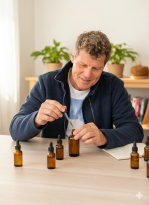
Content 50 ml
Recommended treatment
Free shipping on orders of more than £ 30.00
VAT included

While it is always possible to find out information about the effects that divorce has on children, it can be difficult to find information on the consequences for adults after a divorce. In many western countries, the divorce rates remain high, but are starting to stagnate.
This is mainly due to more couples choosing not to marry in the first place, or not being able to afford divorce, as the same level of resources required to run one household in marriage, can rarely be stretched to cover the outgoings of two households.
Increasingly people understand that their lives post-divorce will be tough, and there are some differences depending on whether you are a man or a woman.
Research undertaken in the United Kingdom, New Zealand, and Australia, has indicated that it can be helpful for adults to understand divorce as a process rather than one single event that terminates a marriage. A build-up of stress, alienation and anger and negative emotion takes place prior to the idea of divorce even being raised, and from there, many conflicts remain unresolved. All members of a family, children and adults, are experience life transitions over an extended period of time, which can be exhausting and traumatic. Adults will experience feelings of bitterness, helplessness, and anger.
In the immediate period surrounding the decision to divorce, there will be discussions of how and when to separate. It is at this stage that some couples explore marriage counselling, although others just choose trail separation, and some opt for extramarital affairs. The marriage at this time can still be in a state of flux as roles and positions are renegotiated.
Stress, anxiety and depression caused by the divorce or pre-divorce pressure can adversely affect parenting. Studies in the U.S. and U.K. found children and adolescents suffered thanks to high levels of marital disharmony, and inconsistent parenting or just through the fact that parents were not taking care of themselves, let alone their offspring. Changing family dynamics expose children to a greater level of spousal fighting and everyone finds that their emotional and psychological well-being starts to diminish.
Post-divorce, the most difficult and stressful phase of the divorce process for all members of the family begins. Divorcing parents have to redefine their own world, by acknowledging legal obligations, and negotiating their way economically, while redefining their roles as single or absent parents, or as primary caregiver. There are many new stressors, but at least now the fighting can hopefully cease, and a new road forged ahead.
Created by Tom Vermeersch (bio)

Tom Vermeersch is a certified Psychologist and Bach flower expert with more than 30 years of experience.

Is the world as we know it over?
Since the outbreak of the COVID-19 pandemic, governments around the world have taken unprecedented measures to stop the spread of coronavirus. The rapid changes we've seen have had an impact on almost every aspect of our lives.

Simple tips to not be afraid of the future
No one knows what the future holds, so don't waste time and energy worrying about it. Read our tips and find out how to stop being afraid of what might never happen.

Subtle signs your child is unhappy
According to figures from the World Health Organisation, more than 260 million people worldwide suffer from depression. And it's not only adults who are diagnosed with this illness. Children as young as three or four years old can experience depression.

Why a life without stress and obstacles is unrewarding
Stress can be both good and bad; it’s up to you how you look at it. But too much stress can be dangerous. Read more about stress in this article!

Isn't depression just a fancy word for feeling a bit down?
Mental health issues such as depression and anxiety affect around 1 in 6 people at some stage of their life. Despite it being such a common problem, many sufferers wait months or even years before seeking help.

Tips to balance your negative aspects
Everyone is unique, even in their own bad habits or negative traits. Here are some tips to balance those negative traits in our new article!

Hiding a depression: find out if someone you know - or you yourself! - is doing this
It's not always easy to tell if someone has depression. While some signs such as sadness, pessimism and withdrawal from social interaction are easy to recognise, other symptoms may be less obvious. And some people are very good at hiding their depression - even from themselves!

Do you suffer from a disorder known as "musturbation"? This term was first coined in the 1950s by psychotherapist Albert Ellis and described the way a negative inner voice rules our minds and bludgeons us with words such as "must", "should", and "ought".

"Bach Flower Advice" becomes "Mariepure"
After 25 years in the Bach flower world, we asked ourselves, is now the right time for our own new name? Not only have we grown, but so have you, along with the confidence you have in us. That's why we want to connect ourselves to our own name. That name is Mariepure.

Standing Up To A Narcissistic Pervert
Whether it's with a romantic partner or a housemate, there's no doubt that a relationship with a narcissist can be very challenging. But are there ways to cope better? Or is it better to leave the relationship?
While it is always possible to find out information about the effects that divorce has on children, it can be difficult to find information on the consequences for adults after a divorce. In many western countries, the divorce rates remain high, but are starting to stagnate.
This is mainly due to more couples choosing not to marry in the first place, or not being able to afford divorce, as the same level of resources required to run one household in marriage, can rarely be stretched to cover the outgoings of two households.
Increasingly people understand that their lives post-divorce will be tough, and there are some differences depending on whether you are a man or a woman.
Research undertaken in the United Kingdom, New Zealand, and Australia, has indicated that it can be helpful for adults to understand divorce as a process rather than one single event that terminates a marriage. A build-up of stress, alienation and anger and negative emotion takes place prior to the idea of divorce even being raised, and from there, many conflicts remain unresolved. All members of a family, children and adults, are experience life transitions over an extended period of time, which can be exhausting and traumatic. Adults will experience feelings of bitterness, helplessness, and anger.
In the immediate period surrounding the decision to divorce, there will be discussions of how and when to separate. It is at this stage that some couples explore marriage counselling, although others just choose trail separation, and some opt for extramarital affairs. The marriage at this time can still be in a state of flux as roles and positions are renegotiated.
Stress, anxiety and depression caused by the divorce or pre-divorce pressure can adversely affect parenting. Studies in the U.S. and U.K. found children and adolescents suffered thanks to high levels of marital disharmony, and inconsistent parenting or just through the fact that parents were not taking care of themselves, let alone their offspring. Changing family dynamics expose children to a greater level of spousal fighting and everyone finds that their emotional and psychological well-being starts to diminish.
Post-divorce, the most difficult and stressful phase of the divorce process for all members of the family begins. Divorcing parents have to redefine their own world, by acknowledging legal obligations, and negotiating their way economically, while redefining their roles as single or absent parents, or as primary caregiver. There are many new stressors, but at least now the fighting can hopefully cease, and a new road forged ahead.

Since the outbreak of the COVID-19 pandemic, governments around the world have taken unprecedented measures to stop the spread of coronavirus. The rapid changes we've seen have had an impact on almost every aspect of our lives.
No one knows what the future holds, so don't waste time and energy worrying about it. Read our tips and find out how to stop being afraid of what might never happen.
Read the complete article
According to figures from the World Health Organisation, more than 260 million people worldwide suffer from depression. And it's not only adults who are diagnosed with this illness. Children as young as three or four years old can experience depression.
Stress can be both good and bad; it’s up to you how you look at it. But too much stress can be dangerous. Read more about stress in this article!
Read the complete article
Mental health issues such as depression and anxiety affect around 1 in 6 people at some stage of their life. Despite it being such a common problem, many sufferers wait months or even years before seeking help.
Everyone is unique, even in their own bad habits or negative traits. Here are some tips to balance those negative traits in our new article!
It's not always easy to tell if someone has depression. While some signs such as sadness, pessimism and withdrawal from social interaction are easy to recognise, other symptoms may be less obvious. And some people are very good at hiding their depression - even from themselves!
Do you suffer from a disorder known as "musturbation"? This term was first coined in the 1950s by psychotherapist Albert Ellis and described the way a negative inner voice rules our minds and bludgeons us with words such as "must", "should", and "ought".
After 25 years in the Bach flower world, we asked ourselves, is now the right time for our own new name? Not only have we grown, but so have you, along with the confidence you have in us. That's why we want to connect ourselves to our own name. That name is Mariepure.
Whether it's with a romantic partner or a housemate, there's no doubt that a relationship with a narcissist can be very challenging. But are there ways to cope better? Or is it better to leave the relationship?
Bach Flowers are not medicinal but harmless plant extracts which are used to support health.
© 2026 Mariepure - Webdesign Publi4u


Are you unsure which Bach flowers can help you? Contact Tom for free advice.